
White is easy to maintain, looks brighter than other colours over a longer period, is the least commonly rejected colour among family members, has high resale value, provides better safety at night, absorbs less heat in the summer season, makes small cars look bigger, and is not considered inauspicious.

Some of the new products targeted at launch are the all-new Defender.

From the Sensex pack, IndusInd Bank, NTPC, Asian Paints, Hindustan Unilever, JSW Steel, Tech Mahindra, Bajaj Finance, Infosys, Wipro, ICICI Bank, Bajaj Finserv, HDFC Bank and Tata Motors were among the major laggards. HCL Technologies, Power Grid, Titan, Reliance Industries, UltraTech Cement, Tata Steel, State Bank of India and Mahindra & Mahindra were the gainers.
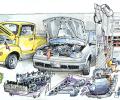
An increase in sales across all categories in the automobile industry, has made need for higher working capital inevitable.

Amid better semiconductor chip supplies, the Indian automotive industry posted an 8 percent growth in production of vehicles across categories for the month of May, with three-wheelers (20 per cent) and passenger vehicles (16 per cent) leading the pack. Exports, however, dipped 21 per cent at an industry level. The industry also recorded its highest-ever May wholesales of domestic passenger vehicles (334,802 units), riding on high demand for sport utility vehicles (SUVs) and better supplies of semiconductor chips.

Tata Sons, holding company for the Tata group, is working on building a centralised rural business platform that could be leveraged for the entire group's benefit, instead of each company looking at it separately.
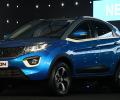
Trend researchers who come from design schools and have an art and sociology background are the latest foot soldiers in the struggle of auto companies to stay ahead in the competitive race.

Kotak Mahindra Bank was the biggest loser in the Sensex pack, sliding 2.68 per cent, followed by Tech Mahindra, Mahindra & Mahindra, Axis Bank, Hindustan Unilever, Tata Motors, Tata Consultancy Services, Bajaj Finserv, Bajaj Finance, Nestle and Titan. In contrast, NTPC, Power Grid, Larsen & Toubro, HDFC, Reliance and HDFC Bank were the gainers.
Tata Motors created the idea some four years ago with the Indigo CS, but not much has happened so far.
Looking to put money in aviation, infrastructure and also to reduce debt of group companies.

Equity benchmark indices ended flat on Wednesday with Sensex sliding 33 points and Nifty gaining 9 points after an unabated record-breaking rally in the last few trading sessions. Weak global market trends and fall in HDFC twins also spoiled markets party. The 30-share BSE Sensex dipped 33.01 points or 0.05 per cent to settle at 65,446.04.

The company has already unveiled the European version -- Nano Europa -- at the Geneva Motor Show earlier this month -- which is likely to be fitted with a more powerful engine than the Indian version complying with Euro-V emission norms.

Nifty ends above 8,600; Tata Motors, RIL top leaders

Compact sedans (Maruti Dzire, Hyundai Aura, Tata Tigor)' share in the overall sedan category grew from 68% in 2021 to 74.6% in 2024. Mid-sedans' (Honda City, Maruti Ciaz, Volkswagen Virtus) share declined from 26.2% in 2021 to 20.2%.

IT major nears $100 bn m-cap, accounts for 61% of the group's combined valuation.

Ahmedabad-based Adani Group is said to be the frontrunner to buy out both Tata Steel and Larsen & Toubro's stake in Dhamra.

Only five of India's top 20 car models have seen a reduction in wait times over the past year.

The electric vehicle evolution in India's passenger vehicle market has remained frozen in time and may see limited adoption over the next decade, experts say.
Tata Motors was the top gainer in the Sensex pack rallying 5.32 per cent. Among other prominent gainers were Bharti Airtel, IndusInd Bank, Sun Pharma, Axis Bank, Maruti Suzuki, Bajaj Auto and TCS.

Automaker Toyota Kirloskar Motor (TKM) on Tuesday said it will increase prices of its entire model range by up to 2 per cent with effect from October 1 in order to partially offset the impact of rise in input costs. The company, which is a joint venture between Japan's Toyota Motor Company and Kirloskar Group, sells a range of vehicles including Innova Crysta and Fortuner in the domestic market. The company will realign the prices of its models, with effect from October 1, 2021, TKM said in a statement.

Nano remains a cautionary tale of misplaced ambitions and a drag on profit.

Carmakers Mercedes-Benz, Audi, Renault, Kia India and MG Motor on Wednesday announced plans to hike vehicle prices from January to partially offset the impact of rising input costs. They join the likes of market leader Maruti Suzuki India and Tata Motors, which have also made the year-end announcements to raise prices from next month. Audi India said it will increase prices of its entire model range by up to 1.7 per cent, while Mercedes-Benz India noted it will hike the prices by up to 5 per cent from January 1.

The country saw a massive year-on-year surge in the demand for electric vehicles, with retail sales of electric two-wheelers rising by 58 per cent, passenger vehicles by 130 per cent, three-wheelers by 82 per cent, and commercial vehicles by 171 per cent in March 2023, according to the data shared by the Federation of Automobile Dealers Associations (Fada). According to a report by JMK Research, the EV segment as a whole grew by 157 per cent during FY23, to 1,180,597 units, from 458,746 units a year ago. Overall, EV sales in March 2023 rose by 82 per cent from the March 2022 figure, the JMK report added.
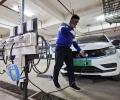
The government on Friday approved an electric-vehicle policy, under which duty concessions will be given to companies setting up manufacturing units in the country with a minimum investment of $500 million, a move aimed at attracting major global players like US-based Tesla. According to an official statement, the companies setting up manufacturing facilities for e-vehicles will be allowed to import a limited number of cars at lower customs duty. The policy seeks to promote India as a manufacturing destination for EVs and attract investment from reputed global EV manufacturers, it added.

Among the Sensex firms, Tata Motors jumped over 3 per cent. Tech Mahindra, Infosys, HCL Technologies, Axis Bank, Mahindra & Mahindra, ICICI Bank, UltraTech Cement and Kotak Mahindra Bank were the other major gainers. NTPC, Asian Paints, Titan and Power Grid were among the laggards.
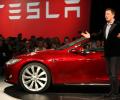
If Tesla comes in, India's position as a manufacturing hub will rise many notches, as it will become only the second country, after China, to have both Apple as well as Tesla.

Passenger vehicle sales continue to drop in June; Maruti, Hyundai, Tata Motors, Toyota witness decline. Mahindra & Mahindra, however, reported a 4 per cent growth.
At close, the Sensex was down 24 points at 21,265 and the Nifty was flat at 6,319.
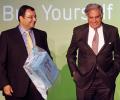
'Tata Steel has doubled, Tata Motors has more than doubled, and Tata Chemicals too has more than doubled.' 'So, Cyrus Mistry was getting accepted by the market for bringing in the change that was good for the group companies.'
General Motors, Nissan Motor India and Volkswagen managed to ride the tide with new launches.
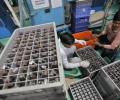
The strike, however, had no impact on production of auto majors Maruti Suzuki India, Hero MotoCorp, Honda Cars India, Mahindra & Mahindra, Tata Motors and Hyundai Motors India as their plants in various parts of the country functioned normally.
In June alone, Rs 13,000 crore (Rs 130 billion) worth shares were released.

UK-based workers of JLR rejected a pay hike offer, saying that it falls short of their expectations, giving rise to a possibility of strike.

Jhunjhunwala, one of India's well-known individual investors, was speaking at the India Economic Conclave organised by the Times Network. He said he won't rule out 5-10 times gains in state-owned banks over the next five years. Shares of PSBs have been on a tear this year. The Nifty PSB index is up 20 per cent so far this year.
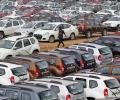
While customers in metro cities are still buying cars, quick growth is likely only from upcountry markets, where highways and roads are being built, and discretionary income and aspirations are rising.

While hybrids, CNG and biofuels found favour in 2018 among many carmakers including Maruti Suzuki, Mercedes-Benz, Toyota and Honda, others such as M&M and Tata Motors have shown full faith in electric vehicles.
Ratan Tata, chief of Tata Group, on Friday said the ambitious Rs 100,000 car will be manufactured from three-four places, including West Bengal and Uttaranchal.

JLR is the UK's largest carmaker, which has witnessed a complete turnaround in its fortunes since Tata Motors acquired the traditional British brands from Ford 10 years ago.

While Tata Motors will stop production of commercial vehicles at Pune for three days this week, Maruti Suzuki India will be having its week-long annual maintenance shut down from next week.
Maruti Suzuki India and Tata Motors reported decline in sales during June this year.
